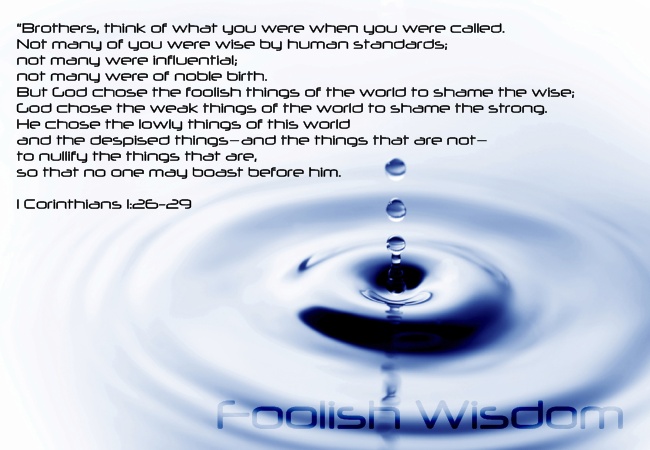
Here it is at long last! Sorry for YouTube's poor quality--it looked a lot better on my computer. I tried this "old film" effect on parts that ended up looking pretty strange on here. And I also apologize for the long pause at the beginning...it will start eventually, I promise!
Wednesday, December 17

Monday, December 15
Vocabulary and Pending Visual Argument
Here's some more vocabulary words:
Picayune ~ Of little value or importance, paltry
Abstemious ~ Marked by temperance
Macerate ~ To make soft and cause to desintegrate, usually by steeping in liquid
Confabulate ~ To talk casually, to chat
And a note about my visual argument this week: it is coming, it will just take a while to do, and thus will probably appear nearer to the end of the week.
Looking forward to seeing everyone else's visual arguments. This is definitely one of my favorite assignments so far.
Picayune ~ Of little value or importance, paltry
Abstemious ~ Marked by temperance
Macerate ~ To make soft and cause to desintegrate, usually by steeping in liquid
Confabulate ~ To talk casually, to chat
And a note about my visual argument this week: it is coming, it will just take a while to do, and thus will probably appear nearer to the end of the week.
Looking forward to seeing everyone else's visual arguments. This is definitely one of my favorite assignments so far.
Sunday, December 7
Sestinas
M'kay...so the other day I learned about a really awesome form of poetry I had never heard of before: the sestina. Sestinas originated a very long time ago, with medieval troubadors and such, but they actually lend themselves very well to modern, unrhymed poetry as well. Here's how they work (this is so cool!): 6 stanzas of six lines each, plus a concluding three-line stanza. The neat part is that each of the six stanzas has the same line-ending words, just in a different order. I know that sounds totally confusing, but here it is: If the lines of the first stanza end with the words "boy", "dog", "house", "lawn", "cars", and "suburb", then each of the other stanzas will have those same ending words in a re-arranged order (615243, if you're curious). So our example would go:
Stanza 1:
...boy
...dog
...house
...lawn
...cars
...suburb
Stanza 2:
...suburb
...boy
...cars
...dog
...lawn
...house
And so on for six stanzas. If you do it right, no two stanzas will have the same ending pattern. In the ending triplet, the six words are used in any order, one in the middle and one at the end of each line. So our example could end with something like:
...boy...house
...car...dog
...lawn...suburb
Needless to say, these are really difficult to write. At first I thought maybe I could just pull six completely random words out of the dictionary and use them...but that makes the poem almost nonsensical.
Here is an example of a "professional" sestina, which I really like:
http://poetry.about.com/gi/dynamic/offsite.htm?zi=1/XJ/Ya&sdn=poetry&cdn=education&tm=15&gps=89_532_855_362&f=00&tt=14&bt=1&bts=0&zu=http%3A//www.sccs.swarthmore.edu/users/03/ahead/sestina.html
When I was trying to come up with an idea for my own sestina, I came across an example in a book that had a very cool layout. Since there is no set line length in this form, someone did a sestina that started with long lines and with each stanza grew shorter and shorter until the sixth stanza consisted only of the end words. In that case, then, you begin with six end words that, in some order, make a coherent sentence, and then work backwards through the previous five stanzas, working them in. This was so cool that I decided to try one of my own in this style. Unfortunately, this blog is so narrow that you lose the effect of the long lines getting shorter. But hopefully it gives the idea:
As a child, you tread lightly, carelessly, through time and you simply know “forever”
Is as elastic, as elusive, as empty of meaning, as “next week”. And to you “never”
Has no meaning. You only breathe and eat and sleep because that’s how you live
And somehow, unlike those grown folks, you have no eyes for the crouching fear.
Dancing down streams, peering around bends in the road, and plucking at flowers,
You notice people disappear sometimes but you figure they’re waiting somewhere.
When does the horror come crashing in? From nowhere? Somewhere?
Finally you realize just how much unspeakable time forever
Can span. When you cut them from the earth, fading flowers
Drop leaves on the oak table. Really, before you had never
Bothered to read the headlines. Now the quivering stench of fear
Rises from the newspaper at breakfast. See, child, where you live.
Or settle and watch television as it broadcasts live
From Africa, Asia, Europe, America, somewhere
Where the newsman chats confidentially about fear
And spilled blood and the empty losses of forever.
No sound, no sound comes after you reach never.
It is always gone there, where nothing new flowers.
Festoon graves with flowers.
Feel grateful that you, at least, live.
Cry, swear, that you will never
Forget those living somewhere
Whose hopes have faded forever
Into a broad enveloping fear.
Child, here I fear
The bright flowers
Let go of forever.
How can you live,
When somewhere
Dies into the never?
Never
Fear.
Somewhere
Flowers
Live
Forever.
You can’t expect the fear to pass away forever.
It dares to live on and on. But you’ve never
Tried picking up dirt somewhere to plant a flower.
The end...anyway, the next kind of poem I want to try is one...I can't remember the name right now...in which the first and third lines of one stanza become the second and fourth lines of the next...or maybe it's the other way around...
Stanza 1:
...boy
...dog
...house
...lawn
...cars
...suburb
Stanza 2:
...suburb
...boy
...cars
...dog
...lawn
...house
And so on for six stanzas. If you do it right, no two stanzas will have the same ending pattern. In the ending triplet, the six words are used in any order, one in the middle and one at the end of each line. So our example could end with something like:
...boy...house
...car...dog
...lawn...suburb
Needless to say, these are really difficult to write. At first I thought maybe I could just pull six completely random words out of the dictionary and use them...but that makes the poem almost nonsensical.
Here is an example of a "professional" sestina, which I really like:
http://poetry.about.com/gi/dynamic/offsite.htm?zi=1/XJ/Ya&sdn=poetry&cdn=education&tm=15&gps=89_532_855_362&f=00&tt=14&bt=1&bts=0&zu=http%3A//www.sccs.swarthmore.edu/users/03/ahead/sestina.html
When I was trying to come up with an idea for my own sestina, I came across an example in a book that had a very cool layout. Since there is no set line length in this form, someone did a sestina that started with long lines and with each stanza grew shorter and shorter until the sixth stanza consisted only of the end words. In that case, then, you begin with six end words that, in some order, make a coherent sentence, and then work backwards through the previous five stanzas, working them in. This was so cool that I decided to try one of my own in this style. Unfortunately, this blog is so narrow that you lose the effect of the long lines getting shorter. But hopefully it gives the idea:
As a child, you tread lightly, carelessly, through time and you simply know “forever”
Is as elastic, as elusive, as empty of meaning, as “next week”. And to you “never”
Has no meaning. You only breathe and eat and sleep because that’s how you live
And somehow, unlike those grown folks, you have no eyes for the crouching fear.
Dancing down streams, peering around bends in the road, and plucking at flowers,
You notice people disappear sometimes but you figure they’re waiting somewhere.
When does the horror come crashing in? From nowhere? Somewhere?
Finally you realize just how much unspeakable time forever
Can span. When you cut them from the earth, fading flowers
Drop leaves on the oak table. Really, before you had never
Bothered to read the headlines. Now the quivering stench of fear
Rises from the newspaper at breakfast. See, child, where you live.
Or settle and watch television as it broadcasts live
From Africa, Asia, Europe, America, somewhere
Where the newsman chats confidentially about fear
And spilled blood and the empty losses of forever.
No sound, no sound comes after you reach never.
It is always gone there, where nothing new flowers.
Festoon graves with flowers.
Feel grateful that you, at least, live.
Cry, swear, that you will never
Forget those living somewhere
Whose hopes have faded forever
Into a broad enveloping fear.
Child, here I fear
The bright flowers
Let go of forever.
How can you live,
When somewhere
Dies into the never?
Never
Fear.
Somewhere
Flowers
Live
Forever.
You can’t expect the fear to pass away forever.
It dares to live on and on. But you’ve never
Tried picking up dirt somewhere to plant a flower.
The end...anyway, the next kind of poem I want to try is one...I can't remember the name right now...in which the first and third lines of one stanza become the second and fourth lines of the next...or maybe it's the other way around...
Subscribe to:
Posts (Atom)

