Well, there's a certain conversation it seems I've had too many times lately. It goes something like this.
Someone: "So, what do you want to do for a career someday?"
Me: "Well, I'm thinking about going into film. I'd love to be a director."
Someone: "Ohhhh, well. [slight pause] Cool. [insert blank stare, laugh, or awkward silence]"
Me: "...Or maybe I'll just be a teacher..."
Someone: "[awkward silence suddenly over] Oh, that would be cool! What age group would you teach? Etc, etc."
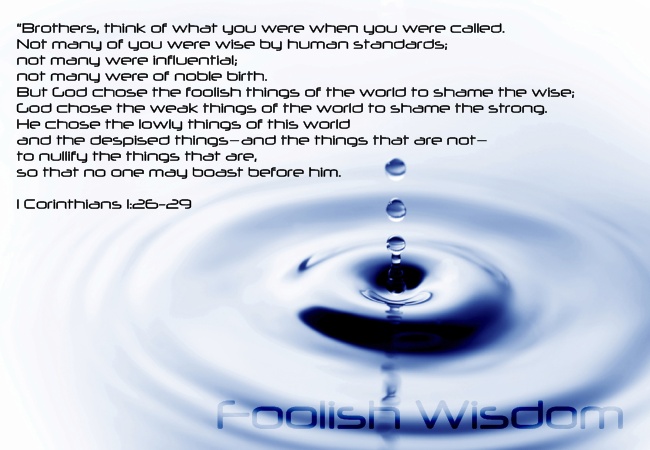
People really don't seem to know what to make of me when I pull out the director thing. I don't know if it's because film directing is usually a male job, if it's because everyone under the age of 18 seems to want to work in film, if I just don't seem like the type, or if film directing isn't the traditional "Christian homeschooler" thing to do (although this last one is becoming more and more obsolete as hoards of homeschoolers are picking up cameras across the country). Whatever the reason, it's starting to get on my nerves. Why is it ok for me to want to be a nurse or a teacher but downright strange for me to want to direct films? Of course, not everyone responds negatively to me...my parents are supportive and encouraging, my Bible study teacher often prefaces her weekly phone calls with "Is this Stephen Spielberg speaking?", and some film people in the area are generously helping me out in any way possible. But I have to admit--sometimes those blank stares hurt a little bit...and sometimes I start to doubt myself.
So why do I want to be a movie director? Lots of kids want to be movie directors...what's my reason? When people pull this question on me, I often stammer a bit. It's really hard to explain. But that's the point of this post; I thought I'd give a try at articulating my reasons in writing.
To open my explanation: on a recent vacation to Yellowstone National Park I was reminded of what brought film directing into my head in the first place. If you've ever been to Yellowstone, you know that bears are a very real presence up there. Not only do they wander the forest, but the tourist gift shops are laden with books bearing encouraging titles like "Mark of the Grizzly". My brother actually read one of these books and was recounting some of the bear attack stories to us as we were driving around in the park. I just sat there, becoming more and more inwardly agitated with these gruesome tales, until I finally begged him to stop talking about it. My family, naturally, tried to encourage me by saying not to worry; we were safe in the car and no bears were going to attack us. But it was for no reason as logical as this that I was afraid of those stories. It was because they were coming alive in my head--every gory detail of them. I could see and hear and feel them in a very real sense. No...I wasn't going insane. I just have what might commonly be called a vivid imagination. Only sometimes a lot more vivid than I would like.
Visualizing things like this is not at all uncommon for me--the Yellowstone incident just reminded me of it. And when those visualizations are a little more pleasant than bear attacks, they are often followed with the strong desire to release them, to share them. I can see how a certain Bible story might have looked, for example, down to the person's features and their emotions and the lighting and all the sights and sounds. And I want to share it. Problem is: even my family gives me blank stares when I start pounding the sofa cushion in frustration because I cannot then and there make the story of Jonah (for example) into a movie... These are the times I like to tell myself that someday I will direct movies and bring all this stuff to life.
I don't remember where I first heard this question, but it set me thinking: "If you found out that you had only six months to live, what would you do in that time (assuming you had unlimited resources)?" There are certainly some personally important things I would do (spending time with family, etc.), but one of the first things that popped into my head was..."I'd start making a movie, of course!" It startled even me how important this seemed. I had no idea how firmly I was holding on to the idea of making movies someday.
Maybe it's more practical to become something like a teacher. Maybe I don't have a chance of standing out in a generation of technology-savvy, creative, aspiring filmmakers. Maybe I don't have the leadership or social skills. Maybe. But I think that someday, as a teacher or something of that line, I would have to look back at everything inside of me--all the people, places, sights, sounds, and truths--and regret, very deeply, that I never got to express them.
So that's that. Not very well expressed, but very much something that has been on my heart. Sometimes I get frustrated because the equipment is difficult to learn, things don't turn out the way I wanted, and I have trouble staying motivated. And sometimes I struggle with figuring out what God's will for my future really is. However, I truly believe that God has given me the gifts I have for a reason and that he will make that reason clear someday.
Monday, September 22

Monday, September 15
A Wreck, A Catastrophe, A Mess
One of the reading assignments this week in "The Language of Composition" was an essay by writer Francine Prose, entitled "I Know Why the Caged Bird Cannot Read". This essay evoked such a violently negative response in me that I felt I must retreat to blogdom and vent a while.
To put it simply, I think the majority of Prose's essay is poorly-argued, egotistical nonsense. I probably shouldn't be saying this when Prose is a published, award-winning writer and I am an opinionated highschool English student--but hey, this is what I truly believe...and I will try to explain why.
First of all, what is Prose's essay about? Well, her essay is subtitled "How American High School Students Learn to Loath Literature". And that about sums it up. Her essay is an attack on current highschool literature programs and how she believes they are failing to teach a love of literature. What exactly is the problem with them? Ummm...on second thought, Prose doesn't seem to know. Sure, she offers lots of extreme complaints and claims, but when framed with "What exactly is the problem?", her essay draws a blank. If you don't believe me, let's take a closer look.
First, Prose attacks the books which modern high schools choose for their reading lists. She flames everyone from James Conrad to John Steinbeck, Ray Bradbury to Harper Lee, Maya Angelou to John Knowles, Aldous Huxley to William Golding. She then hones in on I Know Why the Caged Bird Sings (Angelou) and To Kill a Mockingbird (Lee) and proceeds to grind them into the dirt, leaving them for dead only after more than a page of sarcastic jibes, mocking descriptions, and cruelly under-handed methods. Then, she mourns the disappearance of Homer and Dante. So, after this first section, Prose has established her argument, right? High school literature courses are bad because of the books they select for study. But wait a minute...Prose isn't finished.
Next, she launches off on a tirade about how students have been ruined for deep literary study. She complains that her students are "nearly incapable of doing the close line-by-line reading necessary to disclose the most basic information in a story by Henry James...". She complains that literature courses are so focused on teaching tolerance, identity, and values that they have ceased to teach about aesthetic beauty in the writing itself (imagery, wit, rhythm, language). Every book, she states, is being weighed down by cheesy self-examination, values-oriented study questions, and inane creative writing assignments. Besides the fact that I thoroughly enjoy the goofy creative writing assignments in literature class--which must make me a literary fool in Prose's eyes--I understand Prose's point about how literature study has become more focused on self-examination than on the use of language. But her sarcastic method totally alienates the reader, and we observe in utter bewilderment as she multifariously bashes various literature curriculums, works of literature, student responses to literature, literature discussion questions, and Freud. Ok, so maybe Prose's point is that literature is not being taught and discussed with the right focus.
But now Prose starts complaining about how books for high school literature are chosen simply to represent diversity and values and some worthy books are ignored because of their complex worldviews and difficult subjects. According to Prose, teachers lazily select books with simple messages and ideal characters instead of difficult books with confusing worldviews that are hard to discuss. Let's learn how to handle "ambiguity and contradiction" in literature, Prose exhorts, instead of sticking with books "with banal, simple-minded moral equations". And guess which examples get dragged out again? To Kill a Mockingbird and I Know Why the Caged Bird Sings. She points to stories that contain "realistic" characters, unadmirable characters with issues and complexities, as the ideal stories to study. So does Prose want literature classes to tackle tougher topics?
Well, now, Prose wraps everything up with a rant about how education is dumbing everyone down and turning them into future McDonald's employees. And then she aims one final hit at the books she attacked at the beginning, calling them "lightweight, mediocre hich school favorites".
So what on earth is Prose trying to say? Is a high school literature class bad because they study To Kill A Mockingbird? Is To Kill A Mockingbird a bad book because it is overly sentimental, or poorly written, or idealistic, or what? Or is studying To Kill A Mockingbird alright as long as you study it correctly and avoid values-based questions? If I do obscure creative writing assignments about To Kill A Mockingbird instead of circling all the extended metaphors in The Odyssey, does that mean I will end up working at McDonald's? One minute Prose is attacking the literature, the next minute she is saying the literature is ok as long as it is studied right, and so on and so on.
Besides Prose's total lack of a concrete premise and total faliure to present a convincing and cohesive argument, she writes her material in such a belligerent, sarcastic, exaggerated, superiour way that she serves only to aggravate. She slams more and more major authors of modern literature; is she prepared to offer anything better? I don't hear about any of her writings surpassing the enduring greatness and popularity of To Kill a Mockingbird, A Separate Peace, Of Mice and Men, or Fahrenheit 451. She tags Maya Angelou's memoir as "murky, turgid, convoluted language". She dismisses Elie Weisel's Night as "overwrought". Both of these are memoirs of unimaginable circumstances--racism, rape, concentration camps, death, a loss of faith--through which these authors passed...but Prose offers them no respect for this. She rolls her eyes at the nobility of Atticus Finch in To Kill A Mockingbird because it is not realistic. Of course, readers will gain much more from reading about crude, rude, sinful characters that swear at one another every time they open their mouths. Forbid the thought that we might find inspiration greater than ourselves in a book...instead, we must be confronted with ugliness and confusion so that we can become great readers of literature.
In this essay, Prose sets her self up as the omniscient author/reader who is free to scorn everyone else's offerings to the literary world. Because she once went through, circled all the references to sight in King Lear, and found revelation in this act, she has some kind of divine understanding of the only way literature can possibly be experienced. All poor students who are deluded enough to enjoy To Kill A Mockingbird or some similar work are incapable of understanding higher literature and are doomed to live as unenlightened cashiers at McDonalds...
And while you're at it, she says, buy my latest novel...
Ok, she didn't exactly say that last part...but, to summarize, I found Prose's essay to be highly irritating because she couldn't stick to a premise, she took a highly insulting tone towards other authors, and she arrogently set herself up as all-knowing.
And there's my two cents.
To put it simply, I think the majority of Prose's essay is poorly-argued, egotistical nonsense. I probably shouldn't be saying this when Prose is a published, award-winning writer and I am an opinionated highschool English student--but hey, this is what I truly believe...and I will try to explain why.
First of all, what is Prose's essay about? Well, her essay is subtitled "How American High School Students Learn to Loath Literature". And that about sums it up. Her essay is an attack on current highschool literature programs and how she believes they are failing to teach a love of literature. What exactly is the problem with them? Ummm...on second thought, Prose doesn't seem to know. Sure, she offers lots of extreme complaints and claims, but when framed with "What exactly is the problem?", her essay draws a blank. If you don't believe me, let's take a closer look.
First, Prose attacks the books which modern high schools choose for their reading lists. She flames everyone from James Conrad to John Steinbeck, Ray Bradbury to Harper Lee, Maya Angelou to John Knowles, Aldous Huxley to William Golding. She then hones in on I Know Why the Caged Bird Sings (Angelou) and To Kill a Mockingbird (Lee) and proceeds to grind them into the dirt, leaving them for dead only after more than a page of sarcastic jibes, mocking descriptions, and cruelly under-handed methods. Then, she mourns the disappearance of Homer and Dante. So, after this first section, Prose has established her argument, right? High school literature courses are bad because of the books they select for study. But wait a minute...Prose isn't finished.
Next, she launches off on a tirade about how students have been ruined for deep literary study. She complains that her students are "nearly incapable of doing the close line-by-line reading necessary to disclose the most basic information in a story by Henry James...". She complains that literature courses are so focused on teaching tolerance, identity, and values that they have ceased to teach about aesthetic beauty in the writing itself (imagery, wit, rhythm, language). Every book, she states, is being weighed down by cheesy self-examination, values-oriented study questions, and inane creative writing assignments. Besides the fact that I thoroughly enjoy the goofy creative writing assignments in literature class--which must make me a literary fool in Prose's eyes--I understand Prose's point about how literature study has become more focused on self-examination than on the use of language. But her sarcastic method totally alienates the reader, and we observe in utter bewilderment as she multifariously bashes various literature curriculums, works of literature, student responses to literature, literature discussion questions, and Freud. Ok, so maybe Prose's point is that literature is not being taught and discussed with the right focus.
But now Prose starts complaining about how books for high school literature are chosen simply to represent diversity and values and some worthy books are ignored because of their complex worldviews and difficult subjects. According to Prose, teachers lazily select books with simple messages and ideal characters instead of difficult books with confusing worldviews that are hard to discuss. Let's learn how to handle "ambiguity and contradiction" in literature, Prose exhorts, instead of sticking with books "with banal, simple-minded moral equations". And guess which examples get dragged out again? To Kill a Mockingbird and I Know Why the Caged Bird Sings. She points to stories that contain "realistic" characters, unadmirable characters with issues and complexities, as the ideal stories to study. So does Prose want literature classes to tackle tougher topics?
Well, now, Prose wraps everything up with a rant about how education is dumbing everyone down and turning them into future McDonald's employees. And then she aims one final hit at the books she attacked at the beginning, calling them "lightweight, mediocre hich school favorites".
So what on earth is Prose trying to say? Is a high school literature class bad because they study To Kill A Mockingbird? Is To Kill A Mockingbird a bad book because it is overly sentimental, or poorly written, or idealistic, or what? Or is studying To Kill A Mockingbird alright as long as you study it correctly and avoid values-based questions? If I do obscure creative writing assignments about To Kill A Mockingbird instead of circling all the extended metaphors in The Odyssey, does that mean I will end up working at McDonald's? One minute Prose is attacking the literature, the next minute she is saying the literature is ok as long as it is studied right, and so on and so on.
Besides Prose's total lack of a concrete premise and total faliure to present a convincing and cohesive argument, she writes her material in such a belligerent, sarcastic, exaggerated, superiour way that she serves only to aggravate. She slams more and more major authors of modern literature; is she prepared to offer anything better? I don't hear about any of her writings surpassing the enduring greatness and popularity of To Kill a Mockingbird, A Separate Peace, Of Mice and Men, or Fahrenheit 451. She tags Maya Angelou's memoir as "murky, turgid, convoluted language". She dismisses Elie Weisel's Night as "overwrought". Both of these are memoirs of unimaginable circumstances--racism, rape, concentration camps, death, a loss of faith--through which these authors passed...but Prose offers them no respect for this. She rolls her eyes at the nobility of Atticus Finch in To Kill A Mockingbird because it is not realistic. Of course, readers will gain much more from reading about crude, rude, sinful characters that swear at one another every time they open their mouths. Forbid the thought that we might find inspiration greater than ourselves in a book...instead, we must be confronted with ugliness and confusion so that we can become great readers of literature.
In this essay, Prose sets her self up as the omniscient author/reader who is free to scorn everyone else's offerings to the literary world. Because she once went through, circled all the references to sight in King Lear, and found revelation in this act, she has some kind of divine understanding of the only way literature can possibly be experienced. All poor students who are deluded enough to enjoy To Kill A Mockingbird or some similar work are incapable of understanding higher literature and are doomed to live as unenlightened cashiers at McDonalds...
And while you're at it, she says, buy my latest novel...
Ok, she didn't exactly say that last part...but, to summarize, I found Prose's essay to be highly irritating because she couldn't stick to a premise, she took a highly insulting tone towards other authors, and she arrogently set herself up as all-knowing.
And there's my two cents.
Some Vocabulary...
Here are some unfamiliar words I have found in "Language of Composition" these last few weeks.
~ Confute - to refute; to confound
~ Polemical - of or related to a controversy or argument
~ Medial - situated in the middle; average
~ Martinet - a strict disciplinarian; one who demands strict adherence to forms and rules
~ Confute - to refute; to confound
~ Polemical - of or related to a controversy or argument
~ Medial - situated in the middle; average
~ Martinet - a strict disciplinarian; one who demands strict adherence to forms and rules
Monday, September 8
Two Ways to Say It
I came across something interesting the other day while shuffling around in my music library, and considering what we are learning about rhetoric it seemed particularly applicable. A certain element of rhetoric seems to involve a very purposeful choice of words to evoke a certain response in the audience. Two people can talk about the same thing and present it in two completely different ways.
With that in mind, I paused for thought when I stumbled across two songs that approached a similar subject with a similar worldview and presented two completely different emotions. Christian singer Mark Schultz starts his newest album off with a catchy, upbeat tune called "40 Days". The band Jars of Clay--also Christian--pads out their "Eleventh Hour" album with a raw, mournful song called "Silence". These songs could not be more different, technically, lyrically, or emotionally. However, they both cover the exact same topic: feeling abandoned by God. Check out the lyrics, and you'll see what I mean.
40 Days:
Lord, I came to the mountaintop/To be with You/I felt Your grace falling down like rain/And I was made new/But there are times like now when I’m all dried out
(Chorus)And it’s like 40 days out in the desert/Feeling like I’m lost forever/And crying out for You/But in these 40 days I’m going to seek You/With my heart because I believe You/Have brought me to this place/These 40 days
Lord, Your ways are not my own/But I trust You/Lord, You say, “You are not alone,/For I am with you”/But there are times like now when You can’t be found
Cause You are with me/You never leave me/Even when my world turns upside down/‘Cause there are times like now when I will/Trust somehow/Well, there is a light at the end of the tunnel…I know
Silence:
Take/Take till there's nothing/Nothing to turn to/Nothing when you get through/Won't you break/Scatter pieces of all I've been/Bowing to all I've been/Running to/Where are you?
Did you leave me unbreakable?/Did you leave me frozen?/I've never felt so cold/I thought you were silent/And I thought you left me/For the wreckage and the waste/On an empty beach of faith/Was it true?
Cuz I...I got a question/I got a question/Where are you?
I want you to hear me/I want you to find me/Cuz I...I want to believe/But all I pray is wrong/And all I claim is gone
And I...I got a question/I got a question/Where are you?
So, both of these songs are powerful pictures of what happens when we can't seem to find God. But their messages seem totally different. One is bright and hopeful. The other is desperate and raw. When you listen to the music to go with the words, the contrast becomes even more staggering. So is one of these a "right" picture and the other "wrong"? Or are they both right and the difference is simply a matter of clever rhetoric? In my view, the first song offers more hope, while the second song is more authentic. I believe they are both heartfelt and true. All of this simply offered, for me, a fascinating picture of how--when one becomes aware of the English language as a tool--a single subject can be represented many different ways.
With that in mind, I paused for thought when I stumbled across two songs that approached a similar subject with a similar worldview and presented two completely different emotions. Christian singer Mark Schultz starts his newest album off with a catchy, upbeat tune called "40 Days". The band Jars of Clay--also Christian--pads out their "Eleventh Hour" album with a raw, mournful song called "Silence". These songs could not be more different, technically, lyrically, or emotionally. However, they both cover the exact same topic: feeling abandoned by God. Check out the lyrics, and you'll see what I mean.
40 Days:
Lord, I came to the mountaintop/To be with You/I felt Your grace falling down like rain/And I was made new/But there are times like now when I’m all dried out
(Chorus)And it’s like 40 days out in the desert/Feeling like I’m lost forever/And crying out for You/But in these 40 days I’m going to seek You/With my heart because I believe You/Have brought me to this place/These 40 days
Lord, Your ways are not my own/But I trust You/Lord, You say, “You are not alone,/For I am with you”/But there are times like now when You can’t be found
Cause You are with me/You never leave me/Even when my world turns upside down/‘Cause there are times like now when I will/Trust somehow/Well, there is a light at the end of the tunnel…I know
Silence:
Take/Take till there's nothing/Nothing to turn to/Nothing when you get through/Won't you break/Scatter pieces of all I've been/Bowing to all I've been/Running to/Where are you?
Did you leave me unbreakable?/Did you leave me frozen?/I've never felt so cold/I thought you were silent/And I thought you left me/For the wreckage and the waste/On an empty beach of faith/Was it true?
Cuz I...I got a question/I got a question/Where are you?
I want you to hear me/I want you to find me/Cuz I...I want to believe/But all I pray is wrong/And all I claim is gone
And I...I got a question/I got a question/Where are you?
So, both of these songs are powerful pictures of what happens when we can't seem to find God. But their messages seem totally different. One is bright and hopeful. The other is desperate and raw. When you listen to the music to go with the words, the contrast becomes even more staggering. So is one of these a "right" picture and the other "wrong"? Or are they both right and the difference is simply a matter of clever rhetoric? In my view, the first song offers more hope, while the second song is more authentic. I believe they are both heartfelt and true. All of this simply offered, for me, a fascinating picture of how--when one becomes aware of the English language as a tool--a single subject can be represented many different ways.
Thursday, August 28
The Holy Grail as a pencil holder...
In a scene from a story I heard once, an archeologist was searching for a valuable chalice (cup) that supposedly possessed miraculous powers--something like the Holy Grail, but not quite on the same level. Hearing that a certain church had owned the chalice for a long time, he went to the church and asked the pastor about it. The pastor said he had never seen or heard of the chalice. Finally, the archeologist described the chalice in detail to the pastor. "Oh!" cried the pastor, "That chalice! It's in my office; I've been keeping pencils in it."
It turned out that the pastor was only joking, but that scene always makes me smile. How impossible it is that anyone could miss the value of something like the Holy Grail...but this last week, as I read about complicated rhetoric strategies, this story returned to my mind. So, I reasoned: If the English language is the Holy Grail, then the vast majority of the population is keeping pencils in it. Huh? Allow me to explain.
To most people--including myself--the English language is what you use to get fries at McDonald's, to argue with your siblings, or to answer the questions on the history exam. The English language used on the street and in homes is a highly fluid creature that morphs into whatever it needs to be for the occasion, whether correct or not. But--as evidenced by the rhetoric reading for this week--our language posesses a vast power that often remains untapped. Can you use the English language powerfully without knowing terms like "ethos", "pathos", and "logos"? Sure. It comes naturally to us. Think of a new mother who is trying to convince her husband that the crying baby really does need its diaper changed. She could perfectly naturally appeal to any of the three kinds of rhetoric, without knowing anything about them.
Logos: "Why, just yesterday I read Harvard's newest scientific poll, which found out that babies who didn't get their diapers changed regularly had a 75% higher chance of getting put in jail before the age of twenty-five!"
Pathos: "Honey, look at his poor little red face! Think how awful it must feel to have a wet diaper with no one to change it. I wish he would grow up with happier memories of his father..."
Ethos: "Look, I'm the one who spends all day every day with him. You would think I would know when his diaper needs changing by now--and it needs changing."
Our fictional mother has just employed all three tools of rhetoric to try to build a convincing argument. Even without any knowledge of rhetoric, humans are smart enough to instinctively use good rhetoric strategies when they want to convince someone of something. It's truly amazing.
So how important is it to really learn the language of rhetoric? Imagine what happens when someone is made aware of logos, pathos, and ethos and how each can be used. Imagine if we took our pencils out of the Grail, polished it, and put it in the place of honor it deserves. Wow.
It turned out that the pastor was only joking, but that scene always makes me smile. How impossible it is that anyone could miss the value of something like the Holy Grail...but this last week, as I read about complicated rhetoric strategies, this story returned to my mind. So, I reasoned: If the English language is the Holy Grail, then the vast majority of the population is keeping pencils in it. Huh? Allow me to explain.
To most people--including myself--the English language is what you use to get fries at McDonald's, to argue with your siblings, or to answer the questions on the history exam. The English language used on the street and in homes is a highly fluid creature that morphs into whatever it needs to be for the occasion, whether correct or not. But--as evidenced by the rhetoric reading for this week--our language posesses a vast power that often remains untapped. Can you use the English language powerfully without knowing terms like "ethos", "pathos", and "logos"? Sure. It comes naturally to us. Think of a new mother who is trying to convince her husband that the crying baby really does need its diaper changed. She could perfectly naturally appeal to any of the three kinds of rhetoric, without knowing anything about them.
Logos: "Why, just yesterday I read Harvard's newest scientific poll, which found out that babies who didn't get their diapers changed regularly had a 75% higher chance of getting put in jail before the age of twenty-five!"
Pathos: "Honey, look at his poor little red face! Think how awful it must feel to have a wet diaper with no one to change it. I wish he would grow up with happier memories of his father..."
Ethos: "Look, I'm the one who spends all day every day with him. You would think I would know when his diaper needs changing by now--and it needs changing."
Our fictional mother has just employed all three tools of rhetoric to try to build a convincing argument. Even without any knowledge of rhetoric, humans are smart enough to instinctively use good rhetoric strategies when they want to convince someone of something. It's truly amazing.
So how important is it to really learn the language of rhetoric? Imagine what happens when someone is made aware of logos, pathos, and ethos and how each can be used. Imagine if we took our pencils out of the Grail, polished it, and put it in the place of honor it deserves. Wow.
Tuesday, August 26
Mom? Is that you?
So as I've wallowed in blog construction the past few days, a certain peculiarity has come to my notice.
Each day, I've been building my blog. Whenever I have to stop that, I've been thinking about my blog. Agonizing over names, color choices, graphics, descriptions, gadgets, etc. My mom left me sitting in front of my blog at 10:00 last night, and when she came down at 7:30 the next morning she found me in the exact same spot. (Yes, I had gone to bed in the middle, but not to all appearances) So why all the time, all the effort, for something as abstract as a blog? And this phenomenon is not limited to myself and my blog. Almost everyone has some kind of Internet presence, be it through forums, blogs, facebooks, myspaces, emailing...you get the idea. Most of these presences are meticulously constructed combinations of words, music, graphics, and ideas. Think about it: our Internet presence is us as is defined by thousands of people who will never meet us. This thought seems either scary or cool. Scary, because you must give a complete picture of yourself through a few pictures and words. Cool--admit it--because you don't actually have to give a picture of yourself.
This gives rise to the key question I started pondering yesterday. If someone met a friend or family member on the Internet, would they even recognize them? A seemingly quiet person might retreat to the web to shout at and insult others without consequence. A seemingly aggressive person might become kind and encouraging to those they cannot see face to face. Nerds can become cool, or failing students can become geniuses. Old people become young, young people grow up. People often strike a strange self-contradiction in which they hide some aspects of their character and at the same time reveal their dreams and hopes with a startling vulnerability.
It's strange to think, surfing the web, about what sort of people you really meet. Sure, your cyber classmates or the other aficionados on that unicycling forum are your best friends...but what do you really know about them? If I met my dad or mom, my siblings, my best friend, my teacher, on a blog, forum, or facebook, would I even recognize them? Would they recognize me?
I find this thought to be fascinating...and a little troubling. It has certainly made me aware of how I present myself in cyberspace. I'm ashamed to say that I have taken advantage of facelessness in the past, and strict honesty has loosened its bounds somewhat. After all, no one will ever know or care... Or will they?
Each day, I've been building my blog. Whenever I have to stop that, I've been thinking about my blog. Agonizing over names, color choices, graphics, descriptions, gadgets, etc. My mom left me sitting in front of my blog at 10:00 last night, and when she came down at 7:30 the next morning she found me in the exact same spot. (Yes, I had gone to bed in the middle, but not to all appearances) So why all the time, all the effort, for something as abstract as a blog? And this phenomenon is not limited to myself and my blog. Almost everyone has some kind of Internet presence, be it through forums, blogs, facebooks, myspaces, emailing...you get the idea. Most of these presences are meticulously constructed combinations of words, music, graphics, and ideas. Think about it: our Internet presence is us as is defined by thousands of people who will never meet us. This thought seems either scary or cool. Scary, because you must give a complete picture of yourself through a few pictures and words. Cool--admit it--because you don't actually have to give a picture of yourself.
This gives rise to the key question I started pondering yesterday. If someone met a friend or family member on the Internet, would they even recognize them? A seemingly quiet person might retreat to the web to shout at and insult others without consequence. A seemingly aggressive person might become kind and encouraging to those they cannot see face to face. Nerds can become cool, or failing students can become geniuses. Old people become young, young people grow up. People often strike a strange self-contradiction in which they hide some aspects of their character and at the same time reveal their dreams and hopes with a startling vulnerability.
It's strange to think, surfing the web, about what sort of people you really meet. Sure, your cyber classmates or the other aficionados on that unicycling forum are your best friends...but what do you really know about them? If I met my dad or mom, my siblings, my best friend, my teacher, on a blog, forum, or facebook, would I even recognize them? Would they recognize me?
I find this thought to be fascinating...and a little troubling. It has certainly made me aware of how I present myself in cyberspace. I'm ashamed to say that I have taken advantage of facelessness in the past, and strict honesty has loosened its bounds somewhat. After all, no one will ever know or care... Or will they?
Monday, August 25
Here I am...
Funny...here I am, standing (figuratively speaking) in a place I never planned to be: the world of blogdom. If it weren't for the prompting of a certain AP English class, I wouldn't be here at all. But I'm starting to like it already.
Blogging has always appeared to me to be rather a waste of time. People who don't have anything else to do sit and meticulously record every detail of their lives. They hopefully cast post after post into cyberspace, hoping that someday, someone might actually read what they write. Thousands upon thousands of bloggers do this every day...and who reads them all? If you looked hard enough--or even not that hard--you could find billions of souls laid to bare, billions of lives dissected, before nothing but an empty circuit-riddled world. And maybe one of those million rushing lives will pause for a moment to glance into someone else's quiet construction of identity. So, I had always rolled my eyes at the blog world. And yet look at me now, bouncing up and down in front of my computer, trying to imagine all the great stuff I can post. My thoughts are rushing up and down, going "I can post about that song I heard last week, and that other thing I read in philosophy the other day, and oh, I can't forget to post that poem I wrote, and I've got to send this link to everyone I know, and...and..."
Perhaps I should have kept my cynicism to myself. Or I can just have a good laugh at myself and dive in.
So, welcome to my blog. Keep an eye out for new pictures, quotes, features, and so forth, along with a steady trickle of posts. And I can always hope that someone besides the back of my computer is reading this...
Blogging has always appeared to me to be rather a waste of time. People who don't have anything else to do sit and meticulously record every detail of their lives. They hopefully cast post after post into cyberspace, hoping that someday, someone might actually read what they write. Thousands upon thousands of bloggers do this every day...and who reads them all? If you looked hard enough--or even not that hard--you could find billions of souls laid to bare, billions of lives dissected, before nothing but an empty circuit-riddled world. And maybe one of those million rushing lives will pause for a moment to glance into someone else's quiet construction of identity. So, I had always rolled my eyes at the blog world. And yet look at me now, bouncing up and down in front of my computer, trying to imagine all the great stuff I can post. My thoughts are rushing up and down, going "I can post about that song I heard last week, and that other thing I read in philosophy the other day, and oh, I can't forget to post that poem I wrote, and I've got to send this link to everyone I know, and...and..."
Perhaps I should have kept my cynicism to myself. Or I can just have a good laugh at myself and dive in.
So, welcome to my blog. Keep an eye out for new pictures, quotes, features, and so forth, along with a steady trickle of posts. And I can always hope that someone besides the back of my computer is reading this...
Subscribe to:
Posts (Atom)

